
Exploring Lorient: Beyond the Submarine Base
 Cité de la Voile Éric Tabarly
An interactive sailing museum dedicated to the legendary French sailor Éric Tabarly. Engage with exhibits on modern sailing, experience sailing simulators, and embark on boat tours.
 Festival Interceltique de Lorient
Held annually in August, this vibrant festival celebrates Celtic culture through music, dance, and art, attracting performers and visitors from across the Celtic nations.
 Citadel of Port-Louis
A short ride from Lorient, this 17th-century fortress houses the National Maritime Museum, offering insights into France’s naval history and colonial expeditions.
 Larmor-Plage
A seaside resort popular among locals for its beach-facing restaurants and relaxing atmosphere.
Brittany tourism
 Merville Market Hall
Explore Lorient’s bustling market to sample Breton delicacies such as crêpes, galettes, and fresh seafood.
 Tour de la Découverte
Climb this historic observation tower, built during the era of the French East India Company, for panoramic views of Lorient and its ports.
Lorient Bretagne Sud
 Musée du Faouët
An art museum showcasing works by artists inspired by the region’s landscapes and traditions.
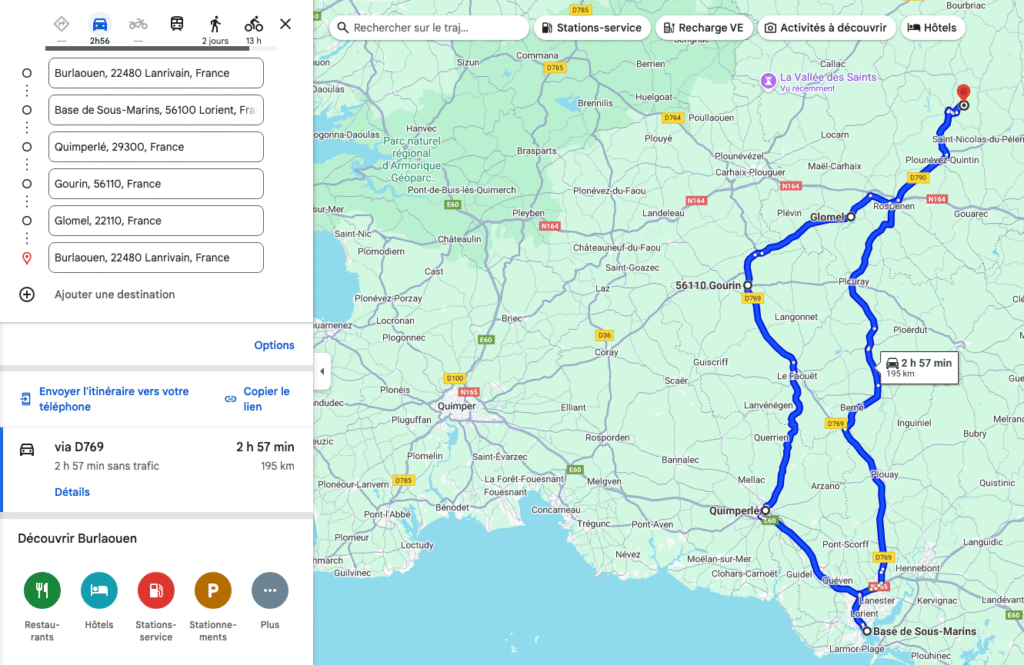
Visual Map of the Journey
For a visual representation of the routes, you can refer to the following map:
 Tips for the Ride
Fuel Up: Ensure your motorcycle is fueled before departure, as fuel stations may be sparse in rural areas.
Weather Check: Brittany’s weather can be unpredictable; check forecasts and dress accordingly.
Safety Gear: Wear appropriate protective gear, including a helmet, gloves, and a riding jacket.
Navigation: While GPS is helpful, carrying a physical map is advisable in areas with limited signal.
Best Time to Ride: Late spring to early autumn offers mild weather and vibrant landscapes.
Local Cuisine: Don’t miss out on Breton specialties like crêpes and cider in the local eateries along the route.
Enjoy your ride through Brittany’s captivating landscapes and rich heritage!
 Route Overview
 The Route: Burlaouen to Lorient
Distance: Approximately 80 km
Estimated Riding Time: 2 hours (excluding stops)
Highlights:
Meandering through the verdant Breton countryside
Charming villages like Le Faouët and Plouay
Scenic views of the Scorff River
Starting from Burlaouen, take the D769 southward, weaving through picturesque landscapes and quaint towns. The route offers gentle curves and well-maintained roads, ideal for a leisurely ride. As you approach Lorient, the scenery transitions from rural charm to the urban tapestry of a city steeped in maritime history.
Return Route: Lorient to Burlaouen via Quimperlé and Le Faouët
Distance: Approximately 100 km
Estimated Riding Time: 2.5 to 3 hours (excluding stops)
Highlights:
Lorient to Quimperlé: Depart Lorient heading northwest on the D765. This stretch offers a pleasant ride through the Breton countryside, leading you to the historic town of Quimperlé.
Quimperlé to Le Faouët: From Quimperlé, take the D22 northward to Le Faouët. This segment provides winding roads and picturesque landscapes, ideal for motorcyclists seeking a tranquil ride.
Le Faouët to Burlaouen: Continue on the D769 heading northeast, which will guide you back to Burlaouen. This final leg traverses rolling hills and offers expansive views of the surrounding countryside.
 Notable Stops:
Quimperlé: A town renowned for its medieval architecture and the confluence of three rivers. Consider visiting the Saint-Colomban Church and strolling through its charming old town.
Le Faouët: Home to the 15th-century timber-framed market hall and the Chapel of Saint Barbara, perched on a hill offering panoramic views.